
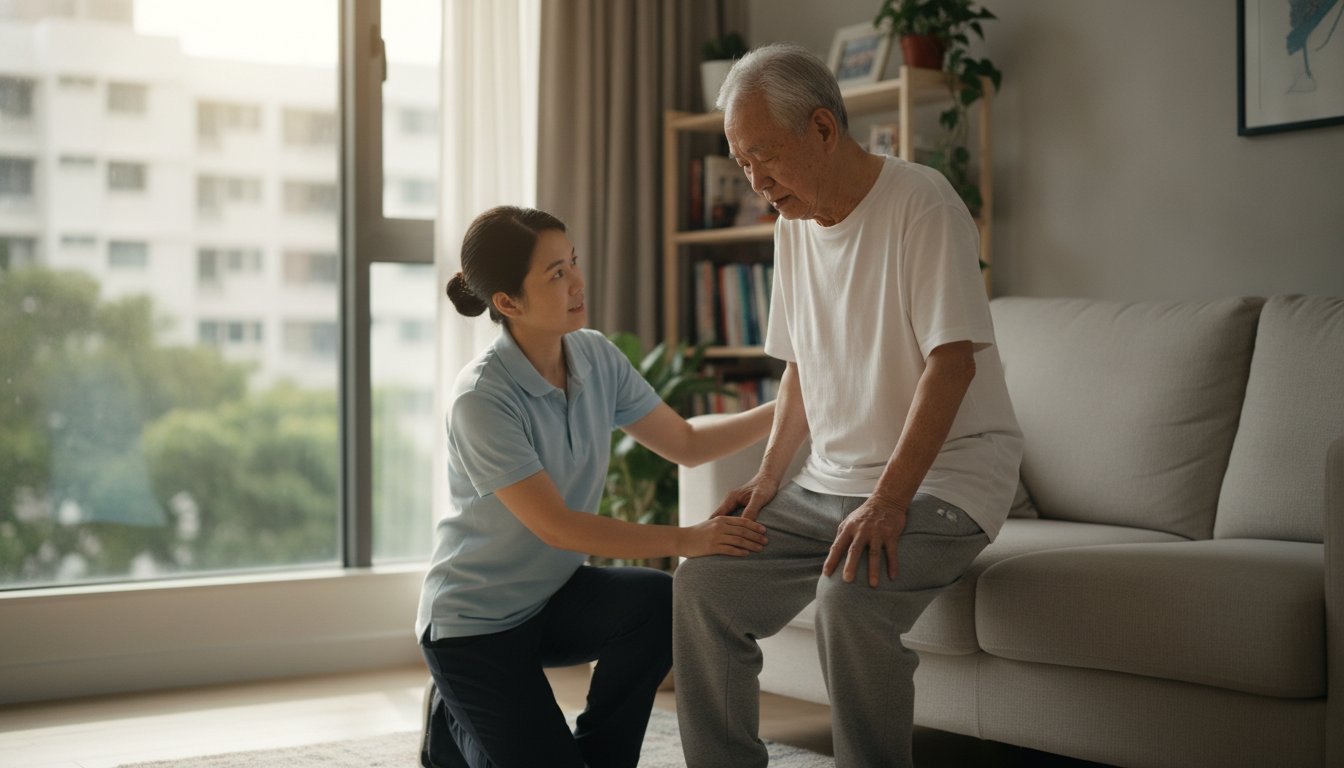
Professional Home Physio in Singapore: Expert Care at Home
The most effective clinical environment for your recovery isn’t actually a clinic; it’s the living room where you spend your daily life. Many patients believe that quality rehabilitation requires a trip to a specialised facility, yet navigating Singapore’s humid heat and heavy traffic whilst managing a painful injury often does more harm than good. Choosing professional home physio ensures you receive elite, evidence-based clinical care without the unnecessary stress of a commute.
We agree that transporting a loved one or carving out hours for travel is a significant burden on your time and energy. In this guide, you’ll discover how expert therapy can be delivered directly to your doorstep for optimal recovery and long-term health. We’ll explore how therapists use your own environment to build a personalised plan that achieves measurable progress in mobility and pain reduction, proving that home-based care is a premium choice for modern rehabilitation.
Key Takeaways
- Learn how AHPC-registered therapists assess real-world obstacles like stairs and furniture to create a safer, more effective recovery space in your own home.
- Discover how home physio provides specialised rehabilitation for complex neurological conditions and post-surgical recovery from hip or knee procedures.
- Understand the cost-to-benefit ratio of mobile clinical care and identify when hands-on manual therapy is essential compared to telehealth options.
- Explore the structured assessment process that turns everyday activities, such as walking to the kitchen unaided, into measurable clinical milestones.
- Get practical advice on preparing your home and medical records to ensure your first professional consultation is seamless and productive.
Understanding Home Physiotherapy in Singapore: More Than Just Convenience
Home physiotherapy is a specialised branch of physiotherapy where clinical expertise is brought directly into the patient’s residence. In Singapore, this service is delivered by professionals registered with the Allied Health Professions Council (AHPC), ensuring that the standard of care matches what you’d expect in a hospital or private clinic. Choosing **home physio **isn’t just a matter of saving time on the PIE or CTE; it’s a strategic clinical decision that places your recovery within the exact context of your daily life.
There’s a common worry that home care is a reduced version of clinic treatment. This isn’t the case. Modern mobile equipment allows us to perform manual therapy, provide resistance training, and even implement advanced modalities in your living room. The intensity of the session comes from the clinical reasoning and the specific prescription of the exercises, not the location of the building. You receive the same level of professional care without the physical toll of a commute.
The Clinical Rationale for Home-Based Care
Rehabilitating at home allows for immediate functional training. If you’ve recently undergone surgery, we can practice navigating your specific staircase or getting into your own bed safely. This direct application reduces the risk of secondary complications and home-based falls. Our therapists also conduct an ergonomic sweep of your environment, identifying trip hazards like loose rugs or poor lighting that a clinic-based therapist wouldn’t see. We bridge the gap between clinical theory and your actual daily requirements.
Who is Mobile Physiotherapy For?
While home visits are often associated with the elderly, the service is designed for anyone where a clinic visit presents a barrier to consistent care:
- Geriatric Patients: Those requiring balance, gait training, and mobility support to maintain independence safely.
- Post-Surgical Recovery: Ideal for the early weeks following knee or hip surgeries when mobility is severely limited.
- Busy Professionals: Individuals who require clinical-grade sports physiotherapy but cannot justify the two-hour round trip through Singapore traffic.
Clinical Conditions Managed Through Home-Based Therapy
While many people associate home-based care solely with the elderly, the clinical scope of home physio is far broader. We manage a diverse range of conditions, from complex neurological deficits to acute sports injuries and desk-bound postural issues. For those seeking information on official home therapy services, the Singapore government provides excellent resources for seniors, but private mobile care extends these benefits to active adults and post-operative patients who require a higher intensity of intervention.
Our mobile clinical services effectively manage several key areas of rehabilitation:
- Neurological Rehabilitation: Providing consistent, high-frequency care for patients managing stroke recovery, Parkinson’s disease, and spinal cord injuries.
- Orthopaedic Recovery: Facilitating early-stage rehabilitation for those recovering from major surgeries or fractures.
- Musculoskeletal Pain: Addressing persistent lower-back-pain, sciatica, and neck stiffness within your actual home-office environment.
- Geriatric Care: Implementing fall prevention programmes, progressive strength building, and gait training to help seniors maintain their independence at home.
Neurological conditions often present unique challenges that are best addressed where they occur. For instance, a patient with Parkinson’s might experience "freezing" of gait specifically at their bedroom doorway or in their narrow HDB corridor. By treating you in your own home, we can apply specific cues and strategies to navigate these exact obstacles, which is something a clinic gym simply cannot replicate.
Post-Surgical Recovery at Home
Early mobilisation is the cornerstone of successful recovery after major procedures. In the first few weeks following knee or hip surgeries, even a short car journey can be exhausting and painful. We bridge the gap between hospital discharge and the point where you’re mobile enough to travel safely. Our therapists manage wound health and monitor swelling whilst initiating gentle range-of-motion exercises, ensuring you don’t lose precious time in your recovery journey.
Managing Chronic Pain in Your Natural Environment
Persistent shoulder pain or chronic stiffness often stems from how we interact with our daily surroundings. By assessing your household routines, we can integrate pain management strategies into tasks like reaching for high shelves or sitting at the dining table. Evidence informed manual therapy delivered at home can effectively modulate pain signals and improve joint mechanics, which often reduces a patient’s long-term dependency on painkillers. If you’re unsure whether your specific symptoms are suitable for a home visit, you can speak with our clinical team for a preliminary discussion.
Comparing Home Care, Clinic Visits, and Telehealth
Deciding on the most effective mode of rehabilitation requires a careful balance of clinical necessity, logistical feasibility, and cost. Whilst traditional clinic visits remain a staple of healthcare, the physical and mental toll of travelling across Singapore whilst injured can often hinder progress. Choosing **home physio **allows for a high-intensity clinical intervention that adapts to your current physical limitations rather than forcing you to overcome them just to reach a front desk.
When evaluating these options, consider the following framework for your recovery journey:
- Home Care: Best for acute pain, limited mobility, post-surgical phases, and neurological rehabilitation where environmental assessment is critical.
- Clinic Visits: Ideal for patients who are fully mobile and require specialised, non-portable technology for their treatment.
- Telehealth: Most effective for the maintenance phase, exercise progression, and quick clinical check-ins.
Home Physio vs. Clinic Sessions
The primary advantage of a clinic setting is access to heavy-duty specialised equipment. For example, modalities like shockwave therapy are often clinic-based due to the nature of the technology required to treat chronic tendon issues. However, the equipment gap is narrowing. Many professional mobile therapists now carry portable versions of essential tools, ensuring that the clinical quality of a home visit is never diluted.
The deciding factor should always be the patient’s mobility. If a car journey or navigating a busy MRT station exacerbates your symptoms, the clinical benefits of a clinic based machine are quickly negated by the inflammation caused by the commute. Home care provides a stable, low stress foundation for the early, most vulnerable stages of recovery.
The Role of Telehealth in Hybrid Recovery
Technology has significantly changed how we deliver care. The adoption of a Telerehab system in Singapore has proven that remote monitoring can be highly effective for certain patients. We often use online telehealth physiotherapy as a secondary support tool. It’s a cost effective way to perform exercise reviews or adjust a programme without the need for a full in-person visit.
A hybrid approach often yields the best results. You might start with intensive home visits to regain basic mobility, transition to clinic sessions for specialised manual therapy, and finally use telehealth for long-term maintenance. This progression ensures you receive the right level of support at the right time, maximising both your recovery speed and your budget.
The Benchmark Approach: What to Expect from a Home Visit
Professional **home physio **is built upon a structured, five-step clinical methodology. This ensures that every session is as rigorous and results oriented as an in clinic appointment. We don’t just check in on you. We manage your recovery through a disciplined progression of care. Our approach follows a logical path from identifying the root cause of your pain to ensuring you have the tools for long-term independence.
- Step 1: Comprehensive Initial Assessment. We evaluate your medical history, current mobility levels, and the specific physical layout of your residence.
- Step 2: Goal Setting. We establish clear, measurable milestones that matter in your daily life, such as walking to the kitchen unaided or navigating stairs safely.
- Step 3: Evidence informed Treatment. Our therapists apply targeted interventions, including manual therapy, dry needling, or therapeutic exercise.
- Step 4: Customised Home Exercise Programme (HEP). We prescribe movements that specifically use your own furniture and space to ensure you can practice safely between visits.
- Step 5: Progress Monitoring. We perform regular reevaluations to adjust the intensity of your clinical plan as your strength and mobility improve.
Assessment and Diagnosis at Your Doorstep
Performing clinical tests like strength grading, reflex checks, and range of motion measurements is standard practice during our visits. We combine these traditional tests with a functional home audit to identify environmental safety hazards that could impede your progress. We use portable diagnostic tools to ensure clinical accuracy throughout every stage of your physical examination. This thoroughness ensures your diagnosis is as precise as any found in a hospital setting, giving us a clear roadmap for your rehabilitation.
Physiotherapy Management and Self-Care
Our therapists are trained to perform specialised interventions such as dry needling or manual release safely within your residence. Beyond the hands on treatment, we place a heavy emphasis on education and self management. You’ll learn exactly when to apply ice or heat and how to position your body for sleep whilst managing pain. This knowledge empowers you to take control of your recovery outside of our scheduled sessions.
Prevention is the final pillar of our approach. We help you organise your living space to reduce the risk of reinjury, such as repositioning frequently used items to avoid excessive reaching or bending. This holistic view ensures that your home remains a place of healing rather than a source of physical stress. To begin your personalised clinical journey, you can book your initial home assessment today.

Starting Your Recovery Journey with Benchmark Physio
Embarking on a rehabilitation programme requires trust in your clinical guide. By choosing home physio, you aren’t just opting for convenience; you’re selecting a premium tier of care where evidence informed protocols are adapted to your unique living situation. We maintain the highest standards of professional integrity, ensuring that every session contributes to a clear, documented path toward your physical goals. Our commitment is to deliver clinical excellence with the warmth and focus that only a one-on-one home visit can provide.
Whilst our goal is to manage your recovery safely at home, it’s vital to recognise when symptoms require immediate medical attention. You should seek urgent professional help if you experience a sudden loss of bladder or bowel control, profound muscle weakness that prevents standing, or severe, unrelenting pain that does not change with position. These symptoms may indicate neurological or vascular issues that require hospital-based diagnostic imaging before home based physiotherapy can safely continue.
Preparing for Your First Session
To make the most of your initial consultation, we recommend having your medical history organised. Please have any relevant doctor’s memos, X-ray reports, or MRI findings ready for the therapist to review. This data allows us to form a more precise clinical diagnosis and ensures your treatment plan aligns with any surgical or medical restrictions. Having these documents prepared saves valuable time during the assessment phase.
Organisation of your space is also helpful. We require a clear, well-lit area where the therapist can safely perform physical tests and manual therapy. It’s best to wear comfortable, loose-fitting clothing, such as a t-shirt and shorts, which allows for an unobstructed assessment of your joint movement and muscle function. This preparation ensures we can focus entirely on your physical assessment from the moment we arrive at your doorstep.
Transparent Fees and Booking
We believe in absolute transparency regarding the cost of care. You can find detailed information on our fees page, which outlines session rates and any applicable travel surcharges. This clarity allows you to plan your recovery budget without any hidden surprises or administrative hurdles. Our goal is to make the administrative side of your care as stress-free as the therapy itself.
Booking your first appointment is a straightforward process. You can reach out via our WhatsApp portal or use the online booking system for immediate assistance. Your home isn’t just a place of rest; it’s the ultimate gym for your daily life. Let’s work together to make it the centre of your successful recovery. If you’re ready to begin your journey, contact us today to schedule your initial home assessment.
Take the Next Step in Your Recovery Journey
Choosing home-based rehabilitation is a strategic commitment to quality and safety within your natural environment. We’ve established that mobile clinical care allows for real-world assessments that simply cannot be replicated in a standard clinic gym. Whether you’re managing complex neurological changes or recovering from major orthopaedic surgery, **home physio **provides a structured, results-oriented pathway to regaining your mobility. Our team of AHPC-registered senior physiotherapists applies evidence-based clinical protocols to ensure every movement brings you closer to your functional goals.
Professional care shouldn’t require a stressful commute through Singapore traffic. By focusing on specialised post-surgical and geriatric rehabilitation, we help you bridge the gap between hospital discharge and full physical independence. It’s time to transform your living space into a centre for healing and progress. Our disciplined approach ensures your recovery is managed by expert hands every step of the way. We look forward to supporting your return to the activities you love most.
Book Your Premium Home Physiotherapy Session Today
Frequently Asked Questions
Do I need a doctor’s referral for home physiotherapy in Singapore?
You don’t need a formal doctor’s referral to book a private home visit. Physiotherapists in Singapore are primary contact practitioners, meaning you can access our services directly. However, if you plan to claim the costs from your private health insurance, some providers may require a referral memo from a GP or a specialist before they approve your reimbursement. It’s always best to check your specific policy requirements beforehand.
What equipment do I need to have at home for the session?
You don’t need to provide any specialised medical equipment for your rehabilitation. Our therapists bring all necessary portable tools, such as resistance bands, sterile needles for dry needling, and assessment instruments. We only ask that you provide a clear, well-lit space and have a sturdy chair or a bed available. We adapt our clinical techniques to work effectively within your existing furniture and household layout.
How much does home physiotherapy cost compared to clinic visits?
Can I use my insurance or Medisave for home-based physio sessions?
Medisave cannot currently be used for private outpatient physiotherapy sessions in Singapore, as it’s primarily reserved for inpatient hospitalisations and specific chronic disease management. Most comprehensive private integrated shield plans or corporate insurance policies do cover physiotherapy, but coverage for home based services varies. We recommend contacting your insurer to verify if they reimburse mobile clinical services delivered by AHPC-registered professionals.
How many sessions will I typically need to see improvement?
Most patients begin to see measurable progress in mobility or pain reduction within 3 to 5 sessions. The total duration of your care depends on the complexity of your condition. Acute musculoskeletal injuries often resolve relatively quickly, whilst neurological rehabilitation or post-surgical recovery requires a longer, more structured programme. We provide regular re-evaluations to ensure your treatment plan remains aligned with your recovery milestones.
Is home physiotherapy safe for elderly patients with multiple health conditions?
It is exceptionally safe because it allows us to monitor the patient in the environment where they are most likely to face physical challenges. Our senior therapists are trained to manage patients with multiple co-morbidities, such as heart disease or diabetes, alongside their physical rehabilitation. We carefully calibrate the intensity of each session based on the patient’s daily vitals and energy levels to ensure a safe, effective recovery.
What happens if my condition requires equipment only available in the clinic?
If your recovery reaches a stage where specialised technology like Shockwave Therapy or heavy gym equipment is essential, we will recommend a transition to our clinic. This usually happens once your mobility has improved enough to make travel safe and comfortable. We often use a hybrid model, where we combine **home physio **for functional training with occasional clinic visits for advanced modalities that aren’t portable.
Can the therapist perform dry needling or manual therapy during a home visit?
Yes, both manual therapy and dry needling are standard components of our mobile service. Our therapists carry sterile, single-use needles and all necessary sanitisation equipment to perform these procedures safely in your residence. Manual release techniques and joint mobilisations are also easily adapted to a home setting. This ensures you receive the same high-standard clinical interventions you would expect in a traditional hospital or private practice setting.

Article by
Ng Hong Kai
Hong Kai has been practising musculoskeletal physiotherapy for more than a decade. He is the first Singaporean to achieve dual credentials as both an APA Titled Musculoskeletal Physiotherapist and a tertiary trained Exercise Scientist.
Hong Kai's broad and extensive skillset allows him to create solutions that are simple, effective and tailored to a client’s musculoskeletal needs. His beliefs in continuing education and self improvement led him to complete his Masters in Clinical Physiotherapy (Musculoskeletal), where he had a chance to participate in formal research into knee osteoarthritis under the supervision of world renowned researcher and physiotherapist Prof Peter 0′ Sullivan. Hong Kai has experience treating a variety of musculoskeletal conditions, with a specific focus on addressing lower back, neck, shoulder and knee pain.
Medical Disclaimer
Our articles are written to help readers better understand musculoskeletal health, injury prevention and physiotherapy. Content is researched using current clinical guidelines and peer-reviewed evidence where appropriate, and is reviewed for accuracy before publication. However, the information is intended for educational purposes only and should not be considered medical advice, diagnosis, or treatment, and should not replace an assessment by a qualified healthcare professional.
Every individual is different, and the causes and appropriate management of pain or injury can vary significantly. If you are experiencing persistent pain, worsening symptoms, significant weakness, numbness, loss of bladder or bowel control, or have sustained a serious injury, seek prompt medical attention.
Reading this article does not establish a physiotherapist-patient relationship with Benchmark Physio or its clinicians. If you require personalised advice, assessment or treatment, please consult a qualified physiotherapist or your healthcare provider.